

Numa Verse

The standard

The Numa Verse standard.

The Numa Verse standard is a peer-reviewed body of knowledge on what Scripture says. It is built on commentaries and scholarship already published, extended by theologians, scholars and students, and reviewed by their peers. People, churches and AI can start from it when they ask what Christianity holds to be true.

Reviewed by [name, credentials, institution]Last updated [date]13 min read

Why it exists

Why does theology need a standard?

Anyone can now generate an answer about the Bible in seconds, and most answers do not say where they came from. A standard gives people, churches and AI one reviewed place to start, with every claim traced to its source and every reviewer named.

Theology has never lacked scholarship. Its commentaries, lexicons and studies fill libraries. What it lacks is one place where that scholarship is gathered, kept current and checked by peers across traditions. The standard is that place.

Compared

How is the standard different from an AI answer or a commentary?

The standard brings together what a single answer or a single book cannot: many authors, peer review and every tradition, with a source and a date on every claim. The table compares it with the two places most people turn to today, an AI chat answer and a published commentary.

Three places people look for what Scripture says
What a reader needsA typical AI chat answerA single published commentaryThe Numa Verse standard
Sources shownOften notYes, in its notesEvery claim cited
Authors namedNoOne author or editorial teamEvery contributor and reviewer
Checked before publicationNoBy the publisher’s own processBy peers in the field
Traditions representedRarely labelledUsually the author’s ownEach in its own words
Changes datedNoIn new editions onlyEvery change, in a public log

The baseline

What does the standard start from?

The standard starts from the work theologians have already published. Commentaries by many authors set out what the text says. Books and peer-reviewed studies supply the depth, and each tradition’s own statements of belief show what it teaches. Every source is cited, so a reader can always go back to it.

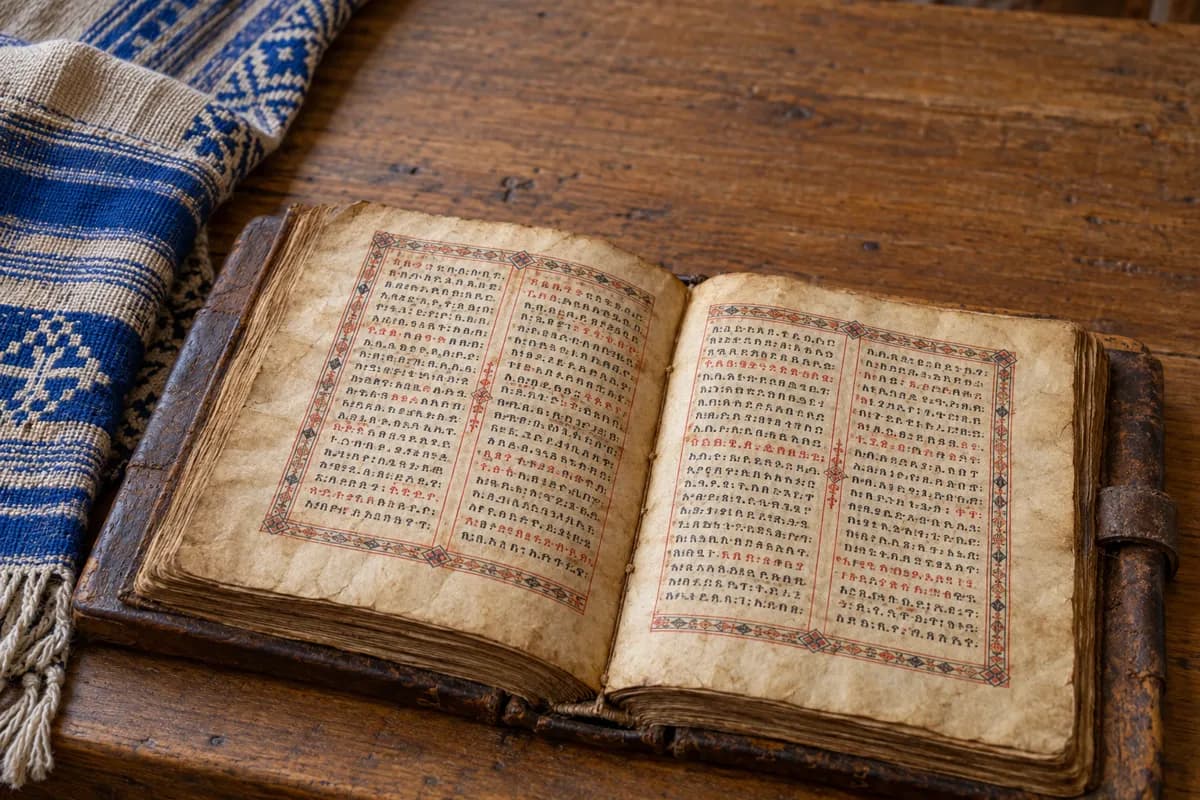
Wider ancient texts are used as context and marked as such. The complete text of the First Book of Enoch, for example, survives only in an Ethiopic translation[4], so the standard reads it in that translation.

Sources, in order of priority
  1. 01Published biblical commentaries by many authors
  2. 02Theologians’ books and peer-reviewed work
  3. 03Each tradition’s official statements of belief
  4. 04Ancient and wider texts, such as the Septuagint, the Aramaic versions and the Book of Enoch, used as context and marked as such

Key terms

What do the standard’s terms mean?

The standard uses a small set of terms with fixed meanings. Each one is defined below and used the same way on every page, in every topic and in every answer the curated AI gives, so readers, contributors and machines read them alike.

The standard
A peer-reviewed body of knowledge on what Scripture says, organized into fields of study, topics and themes.
Published baseline
The commentaries, books, peer-reviewed studies and official statements of belief that the standard starts from.
Field of study
One of the 31 disciplines the standard is organized into, such as textual criticism or Christology.
Topic
A named subject within a field. Every contribution is made to a topic, so its place in the standard is clear.
Contribution
Work added to a topic: filling a gap, verifying what is written, answering a question or proposing new work.
Peer review
The check every contribution passes before it is accepted, made by peers in its field against the sources and the original languages.
Traditions layer
The part of each topic that shows what each tradition teaches, drawn from that tradition’s own official statements.
Version date
The date stamped on every accepted change and recorded in the topic’s public change log.

Worked example

What does a topic in the standard look like?

Every topic is laid out in the same four layers: the text in its original language, what the scholarship shows, what each tradition teaches in its own words, and a public, dated change log. The example below follows one Christology topic, drawn from the Numa Verse study of the person of Christ.

Christology · TopicOne person, two naturesVersion [1.2]Updated [date]Contributors [names]Reviewers [names]

The text

Layer 1 · Original language first
Καὶ ὁ λόγος σὰρξ ἐγένετο
John 1:14 · And the Word became flesh.

The scholarship

Layer 2 · From the published baseline

“In two natures, without confusion, without change, without division, without separation.”

The Council of Chalcedon met from 8 October to 1 November 451 and approved this definition on 22 October[5]. Most later statements on the person of Christ are written with it in view.

The traditions

Layer 3 · Each from its own statements
  • Roman Catholic

    One divine person in two natures; the human nature “assumed, not absorbed”.[6]

    Catechism 464 to 483 · 1992
  • Eastern Orthodox

    One hypostasis in two natures, with two wills and two operations.[7]

    Constantinople III · 680 to 681
  • Oriental Orthodox

    “One nature of God the Word incarnate”, the natures distinct in thought alone.[8]

    Chambésy statement · 1990
  • Assyrian Church of the East

    Two natures and two qnome in one person (parsopa).[9]

    Babai, Book of the Union · c. 600
  • Lutheran

    One person in two natures, with a real communication of attributes.[10]

    Formula of Concord, SD VIII · 1577
  • Reformed

    Two distinct natures in one person, each acting as proper to itself.[11]

    Westminster Confession 8 · 1646
  • Anglican

    Godhead and manhood joined in one Person, never to be divided.[12]

    Thirty-Nine Articles II · 1571
  • Baptist

    Two natures in one person “without conversion, composition, or confusion”.[13]

    Second London Confession 8 · 1689
Where they differThe Chalcedonian churches confess two natures; the Oriental Orthodox churches confess one incarnate nature. In their 1990 agreed statement at Chambésy, the two families concluded that they have held the same faith in different terms[8]. The standard records both formulas and the agreement, and settles neither.

Eight of the traditions in the study are shown. The full topic covers the rest, each from its own statements.

The change log

Layer 4 · Public and dated
Example entries
DateVersionChangeReviewed by
[Date]v1.0Topic published from the baseline[Reviewer names]
[Date]v1.1Contribution accepted: [summary][Reviewer names]
[Date]v1.2Correction upheld: [summary][Reviewer names]

Example layout. Version numbers, dates, names and change-log entries are placeholders until the topic is published.

Peer review

How is a contribution reviewed?

Every contribution is reviewed by peers in its field before it enters the standard. Reviewers check it against the sources, the original languages and the existing scholarship. A contribution is then accepted, returned for revision, or declined with reasons. Accepted work carries its contributor’s name and its reviewers’ names.

  1. Step 1

    Submitted

    To a named topic in the standard.
  2. Step 2

    Reviewed

    By [two] peers in the field.
  3. Step 3

    Decided

    Accepted, returned for revision, or declined with reasons.
  4. Step 4

    Credited

    By name, with the reviewers named.
  5. Step 5

    Published

    As part of the standard, with a version date.

Review criteria

What does every reviewer check?

  • Faithful to the text in its original languages
  • Supported by cited sources
  • Fair to every tradition it describes
  • Clear about what is settled and what is debated

[Founder to confirm: number of reviewers, the criteria, and who resolves a split between reviewers.]

After review

What happens after a contribution is reviewed?

One of three things. It is accepted and published with a version date, returned for revision with the reviewers’ notes, or declined with reasons. Each outcome is recorded, and only accepted work enters the standard. Corrections from readers follow the same path, and an upheld correction is logged like any other change.

  1. Accepted

    1. 1Published into the topic with a version date
    2. 2The contributor and the reviewers named on the change
    3. 3Recorded in the topic’s public change log
  2. Returned for revision

    1. 1The reviewers’ notes go back to the contributor
    2. 2The contributor revises against those notes
    3. 3The revision returns to [the same reviewers]
  3. Declined with reasons

    1. 1The reasons are recorded and sent to the contributor
    2. 2Nothing enters the standard or its change log
    3. 3[Founder to confirm: whether a second review can be asked for]
How to contribute and which roles exist

Records

What does a contributor’s record show?

Every named contributor and reviewer has a public record. It shows their role, credentials and institution, the fields they work in, and every accepted contribution and completed review, each linked to its topic and version. Readers can judge the work by the people behind it.

  • Built from the change log

    A record lists only what the topics’ change logs show.
  • Named by choice

    A contributor who asks not to be named publicly is shown by role and credentials only.

[Founder to confirm: the record fields, and how an unnamed contributor is shown.]

Example record[Contributor name]
Role
[Scholar]
Credentials
[PhD, New Testament]
Institution
[University or seminary]
Fields
[Christology · Biblical languages]
Contributions accepted
[n]
Reviews completed
[n]
First contribution
[Month year]

Fields of study

Which fields does the standard cover?

The standard is organized into 31 fields of study. Textual criticism comes first, because every other field depends on knowing what the text said. The foundations follow, then the biblical languages, Christology, hermeneutics, church history and the rest. Each field is a gateway to its topics and to the Journal articles written on them.

31Fields of study
across the whole

of theology

The first six fields, in order

  1. 01

    Textual criticism

    The discipline concerned with establishing the original or most authoritative form of a text[1]. For the New Testament alone, the register kept at the University of Münster lists about 5,700 Greek manuscripts[2]. It comes first because every other field depends on knowing what the text said.

    Articles in textual criticism
  2. 02

    Foundations

    The study of theology itself: what the field is, how it is studied and how its disciplines relate. It sets the method every other field in the standard follows, before any single topic is taken up.

    Articles in foundations
  3. 03

    Biblical languages

    Hebrew, Aramaic and Greek, read with the ancient versions in Syriac, Latin, Coptic, Ge’ez and more. The Septuagint, the earliest surviving Greek translation of the Hebrew Scriptures, was made for the Jewish community in Egypt[3].

    Articles in biblical languages
  4. 04

    Christology

    What the Church has held about who Christ is, from the New Testament through the early councils and the creeds many churches still recite. Each tradition’s confession is shown in its own words.

    Articles in Christology
  5. 05

    Hermeneutics

    The principles of interpretation: how a reader moves from what a text says to what it means. Hermeneutics is central to the standard, and no single reading is presented as absolute.

    Articles in hermeneutics
  6. 06

    Church history

    How the Church received, copied, taught and debated the text. Codex Sinaiticus, one of the oldest surviving manuscripts of the Greek Bible, was written between 330 and 350[3].

    Articles in church history

More of the 31 fields

  • Bibliology

    What Scripture is, and how it came to be recognized.
  • Pneumatology

    The person and work of the Holy Spirit.
  • Soteriology

    What Scripture teaches about salvation.
  • Ecclesiology

    The nature and life of the Church.
  • Eschatology

    What Scripture says about the last things.
  • [The remaining fields, with summaries, from the register in its order]

Who relies on it

Who uses the standard?

People who want to know what Scripture says, and why. Churches that want to teach from a shared, reviewed base while keeping their own tradition. And AI: the Numa Verse curated AI answers only from the standard, shows the sources behind each answer, and passes questions it cannot answer to a contributor.

People

Asking what Scripture says, with the sources in front of them.

Churches

Teaching from a shared base, in their own tradition.

AI

Answering only from reviewed content, with its sources shown.In development

Corrections

How do I raise an error?

Tell us which topic, what you believe is wrong, and the source you rely on. The topic’s reviewers look at every report. If the standard changes, the change is recorded in the topic’s public change log with its date, so anyone can see what was corrected and when.

  • Every report is read

    By the reviewers of the topic it concerns.
  • Every change is dated

    In the topic’s public change log.
Corrections and suggestions

Report an error

We use your email only to reply about this report. We never sell it.

Questions

Questions about the standard

What if theologians disagree?

Then the standard says so. Where scholars or traditions differ, the standard sets out each position with its sources and marks the question as debated. It does not choose a winner on matters the traditions themselves have not settled.

How is the standard different from a commentary?

A commentary is usually one author’s reading, fixed when it is printed. The standard starts from many commentaries, adds peer-reviewed contributions from every tradition, names every contributor and reviewer, and dates every change, so it stays current and shows where readings differ.

How often does the standard change?

Whenever a contribution is accepted or a correction is upheld. Each change carries a version date in the topic’s public change log, so a reader can see what changed, when it changed and who reviewed it.

Which languages is the text read in?

Hebrew, Aramaic and Greek, with the ancient versions in Syriac, Latin, Coptic, Ge’ez and more. Reviewers check every contribution against the text in its original languages before it is accepted.

Are texts outside the Bible included?

As context, and marked as such. Ancient and wider texts, such as the Septuagint, the Aramaic versions and the Book of Enoch, help explain the biblical text and its history.

Does the curated AI answer from anything else?

No. The Numa Verse curated AI answers only from the reviewed standard, shows the sources behind each answer, and passes any question it cannot answer to a contributor. It is in development.

Can anyone contribute?

Theologians, scholars, pastors and students of theology can apply. Each contributor takes a role that matches their level of study, and every contribution is peer-reviewed whatever the contributor’s standing. The Contribute page explains how to apply.

Is the standard free to read?

[Founder to decide: open to all, or partly for members. The answer sets the wording here and on the Founding Membership page.]

Sources

Which sources does this page cite?

Every fact on this page that does not come from Numa Verse itself is numbered in the text and listed here with its address, so any reader can check it at the source.

  1. 1Britannica, “Biblical criticism: textual, historical, literary”https://www.britannica.com/topic/biblical-criticism
  2. 2Institute for New Testament Textual Research (INTF), University of Münster, “How many Greek New Testament manuscripts are there, really? The latest numbers”https://ntvmr.uni-muenster.de/de/intfblog/-/blogs/how-many-greek-new-testament-manuscripts-are-there-really-the-latest-numbers
  3. 3Britannica, “Septuagint”https://www.britannica.com/topic/Septuagint
  4. 4Britannica, “First Book of Enoch”https://www.britannica.com/topic/First-Book-of-Enoch
  5. 5Francis Schaefer, “Council of Chalcedon”, The Catholic Encyclopedia (1908), New Adventhttps://www.newadvent.org/cathen/03555a.htm
  6. 6Catechism of the Catholic Church, Part One, Section Two, Chapter Two, Article 3, paragraphs 456 to 483https://www.vatican.va/archive/ENG0015/__P1J.HTM
  7. 7Britannica, “Monothelite”https://www.britannica.com/topic/Monothelite
  8. 8Joint Commission of the Theological Dialogue between the Orthodox Church and the Oriental Orthodox Churches, Second Agreed Statement (Chambésy, 1990)https://dss-syriacpatriarchate.org/second-agreed-statement-1990/?lang=en
  9. 9Sebastian Brock, “The Christology of the Church of the East”, Assyrian Church of the Easthttps://bethkokheh.assyrianchurch.org/articles/175
  10. 10Formula of Concord, Solid Declaration VIII, “The Person of Christ”, Concordia Publishing Househttps://bookofconcord.cph.org/en/formula-of-concord-solid-declaration/viii_the_person_of_christ
  11. 11Westminster Confession of Faith, Chapter 8, Bible Presbyterian Churchhttps://bpc.org/wcf-ch-8
  12. 12Philip Schaff, Creeds of Christendom, volume 3, the Thirty-Nine Articles (1571 text), CCELhttps://www.ccel.org/ccel/schaff/creeds3.iv.xi.html
  13. 13Second London Baptist Confession (1689), Chapter 8, Reformed Readerhttps://www.reformedreader.org/ccc/1689lbc/english/Chapter08.htm
Reviewed by [name, credentials, institution]Last updated [date]

Bring your scholarship to the standard.

The standard grows only as fast as its contributors. If you study, teach or write theology, there is a topic waiting for you.