
Numa Verse

Biblical studiesWhat does the text say?

Second Temple and early Christian literature

What is Second Temple and early Christian literature?

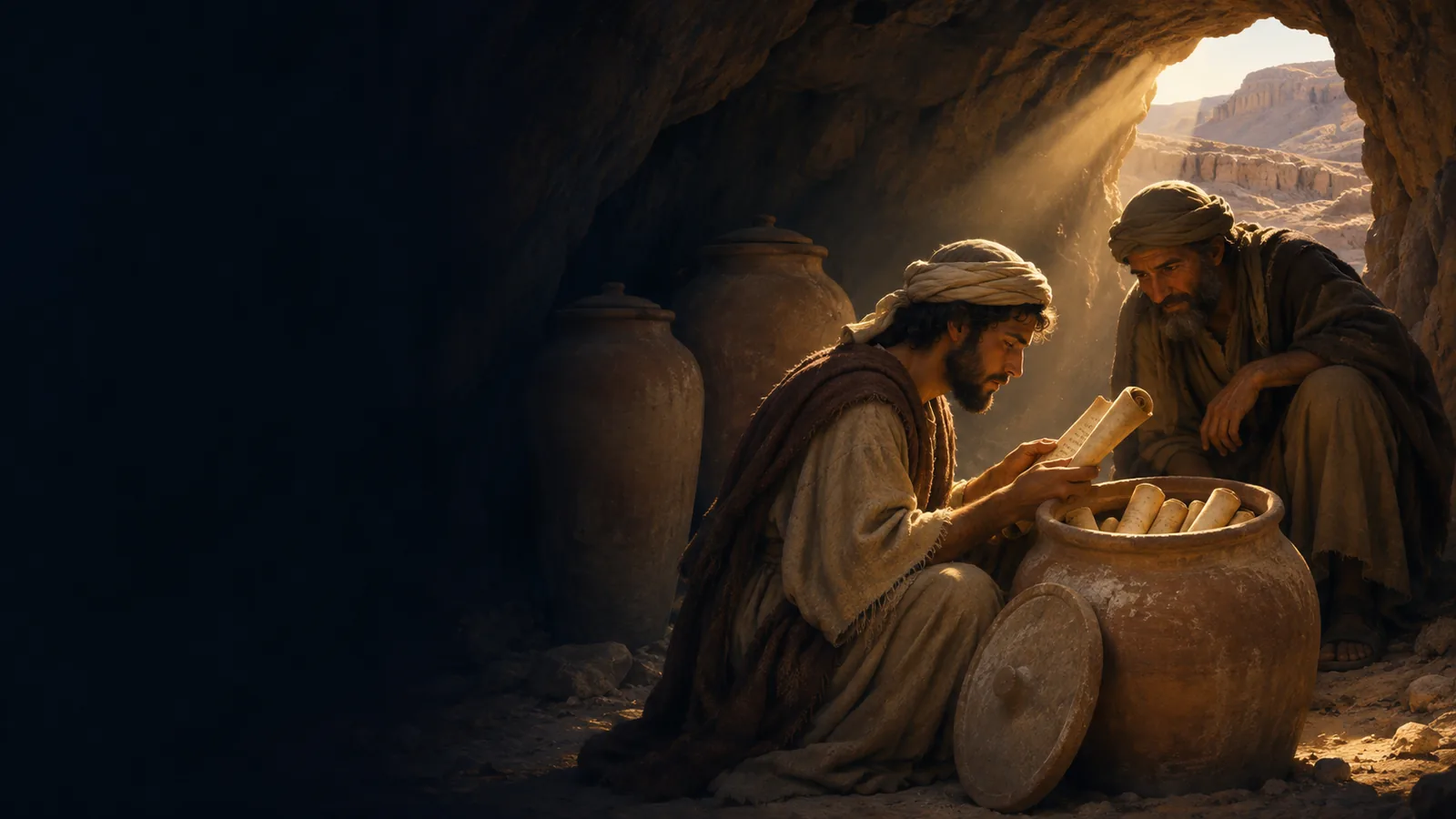
Second Temple and early Christian literature is the study of two groups of ancient writing read together because they share a period, a set of scriptures and many of the same manuscripts: Jewish literature written outside the Hebrew Bible in the later Second Temple period and shortly after, and early Christian literature outside the New Testament.

  • 180Sources
  • 20Traditions
  • 16Dated entries
  • 14Minutes

Study v1.1, 23 October 2026

At a glance

Why it matters for reading Scripture

The writings between the Testaments, the Dead Sea Scrolls among them, are the world the New Testament was written in.

What the study found

Most of this literature reached us through Christian copying, and much survives complete only in Ge'ez, Syriac or Slavonic; its manuscripts, not later legends, settle the public claims made about it.

Where traditions divide

Traditions divide on these books' authority, from Scripture read in worship to no authority at all; scholars divide on provenance, the Essene link, early dates and Gnosticism.

How the traditions compare

  • Catholic Church

    The Catechism cites deuterocanonical books as Scripture, and 2 Maccabees 12:46 carries the main scriptural weight for prayer for the dead.

    The Lectionary for Mass has 58 readings from deuterocanonical texts, and the Office of Readings draws on 1 Clement, Ignatius and Barnabas. Narrative apocrypha shape feasts while the texts are kept at a distance: the Protevangelium and Pseudo-Matthew lie behind the feasts of Anne and of the Presentation. Catholic sources do not treat 1 Enoch as scripture.

    Sources1–6
  • Eastern Orthodox Church

    Reads the Wisdom of Solomon at Vespers for martyrs, monastics and hierarchs, and prays the Prayer of Manasseh at Great Compline.

    The feast of the Entry of the Theotokos tells the Protevangelium story as Holy Tradition without naming the text, and the lives of Thecla, Ignatius and Polycarp follow the Acts of Paul and Thecla, the Ignatian letters and the Martyrdom of Polycarp. One Orthodox writer places 1 Enoch among books preserved for the faithful but not read liturgically as scripture.

    Sources7–13
  • Coptic Orthodox Church

    Fr Moses Samaan names ten deuterocanonical books that the traditional churches "accepted", calls the label "Apocrypha" a misnomer, and says the early church agreed they "ought to be read in church services".

    Diocesan answers, not synodal statements, say the church takes its Old Testament from the Septuagint, which lacks Enoch, and does not recognize 3 Maccabees as canonical, though reading it is acceptable.

    Sources14–17
  • Ethiopian and Eritrean Orthodox Tewahedo Churches

    The Ethiopian church's own list counts 81 books, 46 in the Old Testament and 35 in the New, with Jubilees and Enoch in the Old Testament and church-order books in the New, and says its Bible "was made from the Septuagint".

    The Eritrean diocese of the USA and Canada gives the same count and names Enoch, Jubilees and the three books of Meqabyan in its narrower canon. Sources differ on whether the Ethiopian list's Maccabees are the Meqabyan.

    Sources18–20
  • Syriac Orthodox Church

    Uses the Peshitta, whose early New Testament has 22 books.

    A lectionary page says both Testaments are read "including the apocrypha", except Revelation, the Song of Solomon and 1 and 2 Maccabees, while Patriarch Ignatius Aphram Barsoum says that only "the greater parts" of the two books of Maccabees were excluded. Its seminary teaches the Odes of Solomon, Aphrahat and Ephrem.

    Sources21–25
  • Malankara Orthodox Syrian Church

    Its lectionary index sets Wisdom 7:7 to 24 for the morning of the first Monday of Great Lent.

    Its statement of belief reveres "the Scriptures as the inspired Word of God" but gives no list of books.

    Sources26–27
  • Armenian Apostolic Church

    The pages of the Mother See of Holy Etchmiadzin say nothing on the deuterocanon or the apocrypha, but the manuscript evidence is substantial.

    Many Armenian Bibles include 3 Corinthians, sometimes as canonical, the Testaments of the Twelve Patriarchs are usually included in Armenian Bible codices, and the Zohrab Bible prints 3 Corinthians in an appendix.

    Sources28–30
  • Georgian Orthodox Church

    Catholicos-Patriarch Ilia II closed his 1989 Easter epistle with Sirach 7:1 to 2, cited as "Jesus Sirach", which shows the book in pastoral use.

    The Oshki Bible probably did not include Maccabees, and the printed Georgian Bible of 1743 was revised against Slavonic.

    Sources31–33
  • Assyrian Church of the East

    Calls the Peshitta its "official Bible", as one parish site states, and the Diocese of California publishes a modern Assyrian New Testament from the Peshitta text and a Sunday lectionary.

    A youth retreat of that diocese in January 2015 was dedicated to Mar Aphrahat, with three Bible studies based on his Demonstrations.

    Sources34–36
  • Lutheran

    Follows Luther's 1534 Bible, which printed the Apocrypha as an appendix headed "books not held equal to Holy Scripture, yet useful and good to read".

    The Lutheran confessional writings contain no canon list, and the Lutherbibel 2017 retranslated several of these books from the Göttingen Septuagint, though standard editions usually omit them.

    Sources37–38
  • Reformed and Presbyterian

    The Belgic Confession lets the church read the apocryphal books "as far as they agree with the canonical books", but not to confirm "any point of faith".

    The Westminster Confession (1647) says they are "of no authority in the Church of God" and are to be used no otherwise "than other human writings".

    Sources39–40
  • Anglican

    Article VI distinguishes the canonical books from "other Books" which the Church reads "for example of life and instruction of manners", but does not "apply them to establish any doctrine".

    The King James Bible of 1611 printed 15 apocryphal books.

    Sources41–42
  • Methodist

    Article V, as the United Methodist Church prints it today, keeps the Anglican statement that Scripture contains all things necessary to salvation but has no list of other books and no "example of life" clause.

    Methodist doctrinal standards are therefore silent on reading the Apocrypha.

    Sources4143
  • Baptist and evangelical

    The Baptist Faith and Message 2000 does not mention the Apocrypha or the number of books.

    Wider evangelical teaching sources do not treat 1 Enoch as scripture but discuss it as background, especially for Jude.

    Sources44–47
  • Pentecostal

    The Assemblies of God Statement of Fundamental Truths says that "the Scriptures, both the Old and the New Testaments, are verbally inspired of God", without a list of books and without mention of the Apocrypha.

    Sources48
  • Seventh-day Adventist

    A manuscript copy of Ellen G. White's vision of 11 January 1850 reads, "I saw that the Apocrypha was the hidden book, and that the wise of these last days should understand it".

    The White Estate says the meaning is unclear and that she never mentioned the Apocrypha again or urged its reading. Adventist voices on 1 Enoch diverge.

    Sources49–51
  • Latter-day Saints

    Doctrine and Covenants 91 (1833) says the Apocrypha contains many true things but also many additions "by the hands of men", need not be translated, and benefits the reader enlightened by the Spirit.

    Their own Enoch material in Moses 6 to 7 is separate from 1 Enoch.

    Sources52–53
  • Jehovah's Witnesses

    The Watchtower (1 April 2012) judges the Protevangelium, the Infancy Gospel of Thomas, the Gospel of Peter and the Nag Hammadi gospels to show "a clear lack of divine inspiration".

    Their publications index lists the Apocrypha as "not canonical" and explains why it is omitted from the New World Translation.

    Sources54–55
  • Judaism

    The Babylonian Talmud both forbids reading Ben Sira and quotes Ben Sira 13:17 as "triplicated in the Writings".

    Rabbi Akiba excluded those who read "the extraneous books", yet Sirach stayed popular, and the Rema's gloss on the Shulchan Arukh records the custom of eating cheese on Hanukkah because of Judith. Beta Israel keep Jubilees and Enoch among their sacred Ge'ez texts.

    Sources56–60
  • Islam

    Qur'an 3:49 and 5:110 tell of Jesus shaping a bird from clay, a motif paralleled in the Infancy Gospel of Thomas, and Qur'an 3:37 has Mary in the sanctuary receiving provision from God, paralleled in the Protevangelium.

    Many Muslims regard the Gospel of Barnabas as the only remaining authentic Gospel; the NASSCAL e-Clavis judges it likely composed in the sixteenth century.

    Sources61–67

How the field developed

  1. Modern
    1672

    Jean-Baptiste Cotelier's Paris edition gathers the works of the Fathers "who flourished in apostolic times". L. J. Ittig's Leipzig edition of 1699 shortens the name to "Bibliotheca Patrum Apostolicorum", the source of the modern label Apostolic Fathers.68

  2. Modern
    1713

    Johann Albert Fabricius publishes Codex pseudepigraphus Veteris Testamenti at Hamburg and Leipzig. Annette Yoshiko Reed reads it as the pre-history of the modern category of pseudepigrapha.6970

  3. Modern
    1900

    Emil Kautzsch edits Die Apokryphen und Pseudepigraphen des Alten Testaments in two volumes at Tübingen.7172

  4. Modern
    1913

    R. H. Charles edits The Apocrypha and Pseudepigrapha of the Old Testament in English in two volumes at Oxford; its translations of Enoch and the Testaments are still widely used.737475

  5. Modern
    1922 to 1928

    Strack and Billerbeck's verse-by-verse collection of rabbinic parallels to the New Testament appears. Its use declines after Samuel Sandmel and E. P. Sanders.76

  6. Modern
    1945

    Thirteen Coptic codices are found near Nag Hammadi in Upper Egypt. The find story is disputed, and early accounts place the discovery anywhere from 1945 to 1949.777879

  7. Modern
    1947 to 1956

    Ta'amireh Bedouin find the first scrolls in what became Qumran Cave 1 in 1947, and ten more caves are found by 1956.808182

  8. Modern
    1955 to 2010

    The official edition of the scrolls, Discoveries in the Judaean Desert, appears in 40 volumes.8384

  9. Modern
    1961

    Samuel Sandmel's SBL presidential address of 27 December, published in 1962 as "Parallelomania", warns against overstating the similarity of passages and then treating it as literary dependence running in a fixed direction.85

  10. Modern
    1969

    Walter J. Harrelson convenes the first Pseudepigrapha Breakfast at the Society of Biblical Literature, and a steering committee is appointed on 17 November with James H. Charlesworth as first secretary. The Pseudepigrapha Seminar is formally recognized in 1971.8687

  11. Modern
    1981

    The Association pour l'Étude de la Littérature Apocryphe Chrétienne is founded. It edits the Corpus Christianorum Series Apocryphorum, whose first volumes appear in 1983.8889

  12. Modern
    1983 and 1985

    Charlesworth's The Old Testament Pseudepigrapha appears from Doubleday in two volumes, with more than 50 pseudepigrapha and about 13 Hellenistic Jewish fragments.9087

  13. Modern
    1991

    The slow publication of the scrolls ends in September, when a computer reconstruction appears and the Huntington Library releases its photographs.9192

  14. Modern
    2012

    The seventh edition of the German collection of Christian apocrypha founded by Edgar Hennecke and continued by Wilhelm Schneemelcher, edited by Christoph Markschies and Jens Schröter, appears from Mohr Siebeck.93

  15. Modern
    2013 and 2025

    The two volumes of Old Testament Pseudepigrapha: More Noncanonical Scriptures appear, edited by Richard Bauckham, James R. Davila and Alexander Panayotov, and then by Davila and Bauckham, covering texts not in the earlier collections.94959697

  16. Modern
    2025

    Popović and colleagues, in PLOS ONE on 4 June, publish new radiocarbon dates for 30 manuscripts and a handwriting model called "Enoch". They find that Hasmonean-type hands can be older than the conventional dates and that the Hasmonean and Herodian styles coexisted.9899

How to study Second Temple and early Christian literature

The questions it asks

  • Who wrote a text that survives only in later hands, and was its author Jewish or Christian?100101
  • When was the text written, and when was it copied?
  • What does a parallel between two texts prove?85
  • Do the modern categories, such as "pseudepigrapha" and "Gnosticism", fit the ancient evidence?87102
  • What does the life of a text in later communities show?
  • What are a work's main themes, and how does it bear on the reading of the Old and New Testaments?

Its method

Start
  1. Read a text that reached the present only through Christian hands first as Christian; in Robert Kraft's words, "The burden of proof lies with claims of Jewishness"100103.

  2. Test Jewish or Christian origin against James R. Davila's signature features: concern for cult, priesthood, temple, purity and Torah on the Jewish side, and favorable mention of Jesus or quotation of the New Testament on the Christian side101.

  3. Where the evidence is divided, give the provenance of a disputed text as a range of positions, as with the Testaments of the Twelve Patriarchs104100.

  4. Date the scrolls by paleography and radiocarbon together, and now also by a handwriting model trained on dated samples1051061079899.

  5. Weigh the late date of the rabbinic and targumic texts: the Mishnah reached its final form early in the third century and the standard Targumim not before the fifth, though much of their content is older108109.

  6. State a parallel, its source and its date, and argue any claim of dependence rather than assume it, after Sandmel's warning against "parallelomania"85.

  7. Use "Gnostic" as a conventional label and name the specific group or text, since the category itself is disputed102110111.

  8. Read each text through the communities that copied, read and used it, including its manuscripts, book order and paratext, as Liv Ingeborg Lied does for 2 Baruch100112113.

What to read

Its primary witnesses

  • The Dead Sea Scrolls from eleven caves near Khirbet Qumran, found between 1947 and 1956 and copied between the third century BCE and the first century CE: about 15,000 fragments representing roughly 800 to 900 manuscripts809182114.
  • The Great Isaiah Scroll, which agrees generally with the Masoretic text but carries over 2,600 variants and a fuller spelling115.
  • Codex Alexandrinus of the fifth century, whose contents list includes the Psalms of Solomon116.
  • Ge'ez manuscripts, the only complete witnesses to 1 Enoch and Jubilees; EMML 9001 is the oldest known major Ge'ez Old Testament codex and contains "the oldest known copy of Jubilees"18117.
  • Codex Ambrosianus (7a1) of the sixth to seventh century, the oldest surviving Syriac Peshitta Old Testament pandect, which holds the only complete Syriac 2 Baruch118113.
  • East Slavonic manuscripts, most of them inside the Palaea Interpretata, the only witnesses to the Apocalypse of Abraham and the Ladder of Jacob119120.
  • The thirteen Nag Hammadi codices, about 1,240 pages written on papyrus in fourth-century Egypt and holding fifty-two tractates121122.
  • Codex Tchacos, the fourth-century codex in which the Gospel of Judas survives in Sahidic Coptic123.
  • The Greek Oxyrhynchus fragments and the complete Coptic text of the Gospel of Thomas124.
  • The Cairo Genizah, whose images in the Cambridge Digital Library include the Aramaic Levi Document125126.

Standard reference works

  • The Old Testament Pseudepigrapha, edited by James H. Charlesworth (1983 and 1985), and Old Testament Pseudepigrapha: More Noncanonical Scriptures (2013 and 2025)909497.
  • The Göttingen Septuaginta, Rahlfs' Septuaginta of 1935 and A New English Translation of the Septuagint (2007)127128.
  • Commentaries on Early Jewish Literature (De Gruyter, from 2002)129.
  • Discoveries in the Judaean Desert (40 volumes, 1955 to 2010) and the Study Edition of García Martínez and Tigchelaar8384.
  • Cohn and Wendland's Berlin edition of Philo (1896 to 1909), Niese's critical Josephus (1887 to 1894) and Flavius Josephus: Translation and Commentary, edited by Steve Mason130131132.
  • Bart D. Ehrman's Loeb The Apostolic Fathers (2003) and Michael W. Holmes's third edition of 2007, called "the standard hand edition"133134.
  • Antike christliche Apokryphen in deutscher Übersetzung (2012), Elliott's The Apocryphal New Testament (1993), Ehrman and Pleše's The Apocryphal Gospels (2011) and the Corpus Christianorum Series Apocryphorum9313513689.
  • The Facsimile Edition of the Nag Hammadi Codices (1972 to 1984), The Nag Hammadi Library in English (1977) and the Bibliothèque copte de Nag Hammadi77137.
  • The Leon Levy Dead Sea Scrolls Digital Library, launched on 18 December 2012, and the Online Critical Pseudepigrapha, with 39 electronic critical editions138139140.
  • The NASSCAL e-Clavis: Christian Apocrypha, with manuscript lists and bibliographies for each text141142.

Scholarship referenced in this study

The works below shaped the field and are cited in this study, from the earliest to the most recent. Hover over a book, or select it, to see its author and the sources behind it.

  • 1913The Apocrypha and Pseudepigrapha of the Old Testament in EnglishRobert Henry CharlesThe Apocrypha and Pseudepigrapha of the Old Testament in English (1913)Robert Henry Charles (1855 to 1931)Sources75143
  • 1956Evangelium VeritatisHenri-Charles PuechEvangelium Veritatis (1956)Henri-Charles Puech (1902 to 1986), with Gilles QuispelSources144
  • 1968 to 1979Neophyti 1Alejandro Díez MachoNeophyti 1 (1968 to 1979)Alejandro Díez Macho (1916 to 1984)Sources145
  • 1983Tobit, Septuaginta VIII.5Robert HanhartTobit, Septuaginta VIII.5 (1983)Robert Hanhart (1925 to 11 July 2025)Sources146–147
  • 1987The Gnostic ScripturesBentley LaytonThe Gnostic Scriptures (1987)Bentley Layton (1941 or 1942 to 26 March 2025)Sources148–149
  • 1991A Marginal JewJohn P. MeierA Marginal Jew (1991)John P. Meier (8 August 1942 to 18 October 2022)Sources150–152
  • 1994Discoveries in the Judaean Desert XElisha QimronDiscoveries in the Judaean Desert X (1994)Elisha Qimron, with John StrugnellSources83153
  • 1996Rethinking "Gnosticism"Michael A. WilliamsRethinking "Gnosticism" (1996)Michael A. WilliamsSources102
  • 20011 Enoch: A CommentaryGeorge W. E. Nickelsburg1 Enoch: A Commentary (2001)George W. E. NickelsburgSources154
  • 2005The Provenance of the PseudepigraphaJames R. DavilaThe Provenance of the Pseudepigrapha (2005)James R. DavilaSources155
  • 2007The Apostolic Fathers, 3rd ed.Michael W. HolmesThe Apostolic Fathers, 3rd ed. (2007)Michael W. HolmesSources134
  • 2009Exploring the ScripturesqueRobert A. KraftExploring the Scripturesque (2009)Robert A. Kraft (1934 to 15 September 2023)Sources156–159

Listed because this study draws on their published work; no association with or endorsement of Numa Verse is implied. Suggest a correction.

Key terms

The words that carry the most weight in this field, each defined from the sources of this study. Turn a card over to read its definition.

From Greek apokryphos, "hidden": first a neutral word, later "not genuine or not canonical"; the Protestant name for books in the Catholic Old Testament that are not in the Jewish canon16058.

The Catholic term for the books of the Catholic Old Testament that are not in the Hebrew Bible, used in place of "apocrypha"160161.

The Orthodox term for the "readable" books, read for piety and called neither canonical nor apocrypha; no pan-Orthodox decision fixes their status162163.

Works in biblical style, usually falsely ascribed to a biblical figure and in no canon; the term "has been debated from the very start"16487.

Jewish writing "between the Bible and the Mishnah", the name that replaces "intertestamental" in titles and series16586129.

A term coined by Geza Vermes in 1961 for a category of writings and for an interpretive process, later restated as "texts that borrow authority from scriptural predecessors by rewriting them"166167.

A modern editorial label, from Cotelier (1672) and Ittig (1699), for early Christian writers held to have flourished in apostolic times68.

An Aramaic translation or paraphrase of the Hebrew Bible, given orally in the synagogue verse by verse; plural Targumim109168.

A Qumran commentary that interprets a biblical text verse by verse with the formula "pishro"; plural pesharim16991.

Once defined as "the doctrine of salvation by knowledge", now a disputed modern category; Michael Williams argued that it implies a single rebel movement that ancient self-definition does not support170102.

Questions people ask

No. The New Catholic Encyclopedia states that the scrolls contain no reference to John the Baptist, Jesus or his followers105. Their value for the New Testament lies in shared language and practice within a common Jewish world, and the Library of Congress concludes that Qumran literature and early Christian teaching "do not reflect a direct link"171172.

Their publication was slow: access was restricted to the editorial team, and by 1991 only about half the scrolls had been published91173. In September 1991 a computer reconstruction appeared and the Huntington Library announced unrestricted access to its photographs, after which the Israel Antiquities Authority lifted its restrictions9192174. Eileen Schuller concludes that "the reality was far less dramatic and more mundane"175.

Often that is disputed, because most of these Jewish writings reached the present through Christian copying87. Robert Kraft's working rule is that a text preserved only in Christian hands must first be read as Christian, and James R. Davila proposed "signature features" to test Jewish or Christian origin100103101. The Testaments of the Twelve Patriarchs, for instance, are read either as a Jewish work with Christian interpolations or as a Christian composition of about 200 CE that uses Jewish sources104100.

It is a real early sayings collection, surviving in three Greek Oxyrhynchus fragments of the second and third centuries and one complete Coptic text of 114 sayings from the fourth century124. The e-Clavis states that "there is no widespread agreement" about when it was composed or its relationship to the New Testament124. Patterson suggests a date near 70 to 80 CE, while Davies, Goodacre and Gathercole argue that Thomas knows the Synoptics176124. Calling it a "fifth gospel" reflects the judgment of one scholarly group, the Jesus Seminar, in The Five Gospels (1993)177178.

No. Karen L. King presented the papyrus in 2012, and critics pointed at once to faulty Coptic grammar and close dependence on the Gospel of Thomas179180. In 2016 King said the provenance documents "were fabrications" and conceded that the fragment was most likely a fake; it is silent on whether Jesus married179180.

Contribute to Second Temple and early Christian literature

Register to contribute

  1. 1Catechism of the Catholic Church, paras 1030-1032, Holy Seehttps://www.vatican.va/archive/ENG0015/__P2N.HTM (opens in a new tab)
  2. 2"The Catholic Lectionary for Mass: Index of Deuterocanonical readings", Felix Just SJhttps://1981.catholic-resources.org/Lectionary/Index-Deuterocanonicals.htm (opens in a new tab)
  3. 3Felix Just SJ, "Office of Readings: Non-Biblical Readings", Catholic-Resources.org (updated 2021)https://catholic-resources.org/LoH/OfficeOfReadings-NonBiblical.html (opens in a new tab)
  4. 4"St. Anne", Frederick Holweck, Catholic Encyclopedia (1907), New Adventhttps://www.newadvent.org/cathen/01538a.htm (opens in a new tab)
  5. 5Our Sunday Visitor, What does the Church teach about the Book of Enoch?https://www.oursundayvisitor.com/?p=82062 (opens in a new tab)
  6. 6Catholic Answers, Does the fact that Jude quotes from the Book of Enoch mean it should be in our Bible?https://www.catholic.com/qa/doesnt-the-fact-that-jude-quotes-from-the-book-of-enoch-mean-that-this-book-should-be-in-our (opens in a new tab)
  7. 7The Orthodox Faith, Vol. I, Doctrine and Scripture, Old Testament, Wisdom, OCAhttps://oca.org/orthodoxy/the-orthodox-faith/doctrine-scripture/old-testament/wisdom (opens in a new tab)
  8. 8"Scripture Readings for Fixed Feast Day Vespers", churchmotherofgod.org (Orthodox parish site; publisher not stated)https://churchmotherofgod.org/?p=2040 (opens in a new tab)
  9. 9OCA, The Entry of the Most Holy Theotokos into the Temple (21 November)https://www.oca.org/saints/lives/2026/11/21/103362-the-entry-of-the-most-holy-theotokos-into-the-temple (opens in a new tab)
  10. 10OCA, Protomartyr and Equal of the Apostles Thekla (24 September)https://www.oca.org/saints/id/lives/102715 (opens in a new tab)
  11. 11"Hieromartyr Ignatius the God-Bearer, Bishop of Antioch", Orthodox Church in Americahttps://www.oca.org/saints/id/lives/103594 (opens in a new tab)
  12. 12"Hieromartyr Polycarp, Bishop of Smyrna", Orthodox Church in Americahttps://www.oca.org/saints/lives/2026/02/23/100589-hieromartyr-polycarp-bishop-of-smyrna (opens in a new tab)
  13. 13Fr Stephen De Young, The Book of the Watchers, The Whole Counsel (Ancient Faith)https://blogs.ancientfaith.com/wholecounsel/2020/07/31/the-book-of-the-watchers/ (opens in a new tab)
  14. 14Fr Moses Samaan, "The Deuterocanonical Books", 19 July 2012, lacopts.org (Coptic Orthodox)https://www.lacopts.org/orthodoxy/our-faith/the-holy-bible/the-deuterocanonical-books/ (opens in a new tab)
  15. 15Coptic Orthodox Diocese of the Southern US, Q&A qid=2012 (3–4 Maccabees, 3–4 Esdras)https://qa.suscopts.org/index.php?qid=2012&catid=677 (opens in a new tab)
  16. 16Coptic Orthodox Diocese of the Southern United States, Q&A 30 on the Book of Enochhttps://qa.suscopts.org/index.php?qid=30 (opens in a new tab)
  17. 17Coptic Orthodox Diocese of the Southern US, Q&A qid=1503 (3 Maccabees, Prayer of Manasseh)https://qa.suscopts.org/index.php?qid=1503&catid=677 (opens in a new tab)
  18. 18"The Canonical Books", Ethiopian Orthodox Tewahedo Church, ethiopianorthodox.orghttps://ethiopianorthodox.org/english/canonical/books.html (opens in a new tab)
  19. 19Canonized Books, Eritrean Orthodox Tewahdo Church Diocese of the USA and Canadahttps://english.eritreantewahdo.org/?sermons=canonized-books (opens in a new tab)
  20. 20Ethiopian Orthodox Tewahedo Church, Mahibere Kidusan Next Generation, The Ethiopian Orthodox Bible: A Unique Biblical Canonhttps://nextgeneration.eotcmk.org/learn-geez/blog/the-ethiopian-orthodox-bible-a-unique-biblical-canon (opens in a new tab)
  21. 21"The Peshitto", Syriac Orthodox Resources (syriacorthodoxresources.org)https://syriacorthodoxresources.org/Bible/Peshitto.html (opens in a new tab)
  22. 22Bas ter Haar Romeny and Craig E. Morrison, "Peshitta", e-GEDSHhttps://gedsh.bethmardutho.org/Peshitta (opens in a new tab)
  23. 23"Lectionary", Syriac Orthodox Resources (Malankara Version (Alpha), Fr Dale A. Johnson, 1991; page updated 2002)https://syriacorthodoxresources.org/Lectionary (opens in a new tab)
  24. 24"Lectionaries", Department of Syriac Studies, Syriac Orthodox Patriarchate (from Barsoum, The Scattered Pearls)https://dss-syriacpatriarchate.org/rites/lectionaries/?lang=en (opens in a new tab)
  25. 25Curriculum, Department of Syriac Studies / St Afrem Theological Seminaryhttps://dss-syriacpatriarchate.org/curriculum/?lang=en (opens in a new tab)
  26. 26Malankara Orthodox Syrian Church, Lectionary indexhttp://mosc.in/lectionary/ (opens in a new tab)
  27. 27Malankara Orthodox Syrian Church, "What do we believe"https://mosc.in/the_church/what-do-we-believe/ (opens in a new tab)
  28. 28Mother See of Holy Etchmiadzin, "New Publication", 27 Feb 2019https://armenianchurch.org/en/news/new-publication-22/10499 (opens in a new tab)
  29. 293 Corinthians, e-Clavis, NASSCAL (current as of June 2023)https://www.nasscal.com/e-clavis-christian-apocrypha/3-corinthians/ (opens in a new tab)
  30. 30"Testaments of the Twelve Patriarchs", Jewish Encyclopedia (1906)https://www.jewishencyclopedia.com/articles/14344-testaments-of-the-twelve-patriarchs.html (opens in a new tab)
  31. 31Easter Epistle 1989, Catholicos-Patriarch Ilia IIhttps://orthodoxy.ge/patriarqi/epistoleebi/saagdgomo1989.htm (opens in a new tab)
  32. 32Robert P. Blake, "The Athos Codex of the Georgian Old Testament", Harvard Theological Review 22.1 (1929) 33-56, Cambridge Corehttps://www.cambridge.org/core/journals/harvard-theological-review/article/athos-codex-of-the-georgian-old-testament/70C8905B153D0B7F29A3D00ED709BE00 (opens in a new tab)
  33. 33"Versions of the Bible", Catholic Encyclopedia (1913), New Adventhttps://www.newadvent.org/cathen/15367a.htm (opens in a new tab)
  34. 34"About the Peshitta", Mar Yosip Parish (Assyrian Church of the East)https://maryosipparish.org/documents/assyrian/peshitta/about.html (opens in a new tab)
  35. 35"Virtual Chapel", Assyrian Church of the East, Diocese of Californiahttps://www.acoecalifornia.org/virtualchapel (opens in a new tab)
  36. 36Californian Youth Retreat a Spiritual Success, Assyrian Church of the East Newshttps://news.assyrianchurch.org/californian-youth-retreat-a-spiritual-success/ (opens in a new tab)
  37. 37Martin Beck, "Apokryphen (AT)", WiBiLex, Deutsche Bibelgesellschaft (2007, rev. 2018)https://www.die-bibel.de/stichwort/13529 (opens in a new tab)
  38. 38"Luther und die Apokryphen", Deutsche Bibelgesellschaft, die-bibel.dehttps://www.die-bibel.de/luther-und-die-apokryphen (opens in a new tab)
  39. 39Belgic Confession, art. 6, Christian Reformed Church in North Americahttps://www.crcna.org/welcome/beliefs/confessions/belgic-confession (opens in a new tab)
  40. 40Westminster Confession of Faith (1647), ch. 1, in Schaff, Creeds of Christendom vol. III, CCELhttps://www.ccel.org/ccel/schaff/creeds3.iv.xvii.ii.html (opens in a new tab)
  41. 41Articles of Religion (Thirty-nine Articles), Article VI, Anglicans Onlinehttps://www.anglicansonline.org/basics/thirty-nine_articles.html (opens in a new tab)
  42. 42"1611 King James Bible", King James Bible Online (popular reader edition)https://www.kingjamesbibleonline.org/1611-Bible/ (opens in a new tab)
  43. 43Articles of Religion of the Methodist Church, Article V, United Methodist Church (Book of Discipline 2020/2024)https://www.umc.org/en/content/articles-of-religion (opens in a new tab)
  44. 44Baptist Faith and Message 2000, Southern Baptist Conventionhttps://bfm.sbc.net/bfm2000/ (opens in a new tab)
  45. 45Got Questions, What is the book of Enoch?https://www.gotquestions.org/book-of-Enoch.html (opens in a new tab)
  46. 46The Gospel Coalition, M. Harmon, Why Does Jude Quote 1 Enoch? (1 July 2026)https://www.thegospelcoalition.org/article/enoch-why-jude-quote/ (opens in a new tab)
  47. 47Biola University, Think Biblically, The Truth Behind 1 Enoch (S. McDowell with J. Muddamalle, 1 September 2026)https://www.biola.edu/blogs/think-biblically/2026/the-truth-behind-1-enoch (opens in a new tab)
  48. 48Statement of Fundamental Truths, Assemblies of Godhttps://ag.org/Beliefs/Statement-of-Fundamental-Truths (opens in a new tab)
  49. 49"Apocrypha", Ellen G. White Estate (issues: miscellaneous)https://whiteestate.org/about/issues1/unusual/miscellaneous/apocrypha (opens in a new tab)
  50. 50Manuscript Releases vol. 15 (1985), Ellen G. White Estate, EGW Writingshttps://m.egwwritings.org/en/book/55.340 (opens in a new tab)
  51. 51Adventist Today, report on a Matthew Korpman session on 1 Enochhttps://atoday.org/?p=95794 (opens in a new tab)
  52. 52Doctrine and Covenants 91, The Church of Jesus Christ of Latter-day Saintshttps://www.churchofjesuschrist.org/study/scriptures/dc-testament/dc/91 (opens in a new tab)
  53. 53The Church of Jesus Christ of Latter-day Saints, Pearl of Great Price, Moses 7https://www.churchofjesuschrist.org/study/scriptures/pgp/moses/7?lang=eng (opens in a new tab)
  54. 54"Apocryphal Gospels: Hidden Truths About Jesus?", The Watchtower, 1 April 2012, Watchtower Online Libraryhttps://wol.jw.org/en/wol/d/r1/lp-e/2012248 (opens in a new tab)
  55. 55Watch Tower Publications Index 1986-2026, "Apocrypha", Watchtower Online Libraryhttps://wol.jw.org/en/wol/d/r1/lp-e/1200270408 (opens in a new tab)
  56. 56Babylonian Talmud, Sanhedrin 100b, William Davidson edition, Sefaria APIhttps://www.sefaria.org/api/v3/texts/Sanhedrin.100b?version=english (opens in a new tab)
  57. 57Babylonian Talmud, Bava Kamma 92b, William Davidson edition, Sefaria APIhttps://www.sefaria.org/api/v3/texts/Bava_Kamma.92b?version=english (opens in a new tab)
  58. 58"Apocrypha", C. H. Toy and G. F. Moore, Jewish Encyclopedia 1906https://jewishencyclopedia.com/articles/1644-apocrypha (opens in a new tab)
  59. 59Shulchan Arukh, Orach Chayim 670:2 with Rema, Sefaria APIhttps://www.sefaria.org/api/v3/texts/Shulchan_Arukh,_Orach_Chayim.670.2?version=english (opens in a new tab)
  60. 60"National Library announces digitization project of Beta Israel sacred manuscripts", Times of Israel, 9 October 2024https://www.timesofisrael.com/national-library-announces-digitization-project-of-beta-israel-sacred-manuscripts/ (opens in a new tab)
  61. 61Qur'an 3:49, tr. Mustafa Khattab (The Clear Quran), quran.comhttps://quran.com/3/49 (opens in a new tab)
  62. 62Qur'an 5:110, Mustafa Khattab tr., Quran.comhttps://quran.com/5/110 (opens in a new tab)
  63. 63Infancy Gospel of Thomas, Roberts-Donaldson tr., Early Christian Writingshttps://www.earlychristianwritings.com/text/infancythomas-a-roberts.html (opens in a new tab)
  64. 64Qur'an 3:37, Mustafa Khattab tr., Quran.comhttps://quran.com/3/37 (opens in a new tab)
  65. 65Protevangelium of James, tr. A. Walker, ANF 8, New Adventhttps://www.newadvent.org/fathers/0847.htm (opens in a new tab)
  66. 66"The Islamo-Biblical Pseudo-Gospel of Barnabas", Stephen Lambden, Hurqalya, UC Mercedhttps://hurqalya.ucmerced.edu/node/1611/ (opens in a new tab)
  67. 67"Gospel of Barnabas", NASSCAL e-Clavis entryhttps://www.nasscal.com/?p=2810 (opens in a new tab)
  68. 68"Apostolic Fathers", Catholic Encyclopedia (1907), New Adventhttps://www.newadvent.org/cathen/01637a.htm (opens in a new tab)
  69. 69Internet Archive record, J. A. Fabricius, Codex pseudepigraphus Veteris Testamenti (Hamburg and Leipzig 1713; vol. 2 1723)https://archive.org/details/codexpseudepigr00josegoog (opens in a new tab)
  70. 70Orion Center bibliography, A. Y. Reed, "The Modern Invention of Old Testament Pseudepigrapha", JTS 60.2 (2009) 403-436https://orion-bibliography.huji.ac.il/node/56693 (opens in a new tab)
  71. 71Internet Archive record, E. Kautzsch (ed.), Die Apokryphen und Pseudepigraphen des Alten Testaments vol. 2 (Tübingen: Mohr 1900)https://archive.org/details/dieapokryphenund02kautuoft (opens in a new tab)
  72. 72Internet Archive record, E. Kautzsch (ed.), Die Apokryphen und Pseudepigraphen des Alten Testaments vol. 1 (Tübingen: Mohr 1900)https://archive.org/details/dieapokryphenund01kautuoft (opens in a new tab)
  73. 73Internet Archive record, R. H. Charles (ed.), APOT vol. 1 (Oxford: Clarendon 1913)https://archive.org/details/apocryphapseudep01charuoft (opens in a new tab)
  74. 74Internet Archive record, R. H. Charles (ed.), APOT vol. 2, Pseudepigrapha (Oxford: Clarendon 1913)https://archive.org/details/apocryphapseudep02charuoft (opens in a new tab)
  75. 75R. H. Charles, Apocrypha and Pseudepigrapha of the Old Testament in English (1913), CCELhttps://ccel.org/c/charles/otpseudepig/ (opens in a new tab)
  76. 76C. Durham, review of Strack and Billerbeck, Commentary on the New Testament from the Talmud and Midrash, Concordia Theological Seminary Fort Wayne, 7 Aug 2022https://ctsfw.edu/?p=31516 (opens in a new tab)
  77. 77Birger A. Pearson, review of James M. Robinson, The Nag Hammadi Story, 2 vols. (Brill 2014), Biblical Archaeology Societyhttps://www.biblicalarchaeology.org/reviews/the-nag-hammadi-story-vol-1-2/ (opens in a new tab)
  78. 78Nicola Denzey Lewis and Justine Ariel Blount, "Rethinking the Origins of the Nag Hammadi Codices", JBL 133.2 (2014) 399-419, PDF hosted by Tony Burkehttps://www.tonyburke.ca/wp-content/uploads/Lewis-and-Blount-Rethinking-NHL.pdf (opens in a new tab)
  79. 79"(Still) Rethinking the Origins of the Nag Hammadi Codices", The Marginalia Review of Books (author not identified in extract)https://themarginaliareview.com/?p=11449 (opens in a new tab)
  80. 80Discovery and Publication, Leon Levy Dead Sea Scrolls Digital Library, IAAhttps://www.deadseascrolls.org.il/learn-about-the-scrolls/discovery-and-publication (opens in a new tab)
  81. 81Discovery, The Digital Dead Sea Scrolls, Israel Museumhttps://dss.collections.imj.org.il/discovery (opens in a new tab)
  82. 82Discovery Sites, Leon Levy Dead Sea Scrolls Digital Library, IAAhttps://www.deadseascrolls.org.il/learn-about-the-scrolls/discovery-sites (opens in a new tab)
  83. 83"Discoveries in the Judaean Desert" Index, Orion Center, Hebrew Universityhttps://orion.huji.ac.il/resources/djd.shtml (opens in a new tab)
  84. 84Dead Sea Scrolls: Study Editions, Yale University Library guidehttps://guides.library.yale.edu/Dead_Sea_Scrolls/study_editions (opens in a new tab)
  85. 85Samuel Sandmel, "Parallelomania", JBL 81 (1962) 1–13 (PDF)https://gospelstudies.org.uk/biblicalstudies/pdf/jbl/parallelomania_sandmel.pdf (opens in a new tab)
  86. 86SBL Press, Henze and Lied (eds), The Old Testament Pseudepigrapha: Fifty Years of the Pseudepigrapha Section at the SBL (EJL 50, 2019), product pagehttps://cart.sbl-site.org/books/063550C (opens in a new tab)
  87. 87SBL Press, front matter and introduction PDF of EJL 50 (Henze and Lied 2019)https://www.sbl-site.org/assets/pdfs/pubs/063550P-front.pdf (opens in a new tab)
  88. 88AELAC, Association pour l'Étude de la Littérature Apocryphe Chrétienne, Université de Lausanne sitehttps://wp.unil.ch/aelac/ (opens in a new tab)
  89. 89Corpus Christianorum Series Apocryphorum, series page, Brepolshttps://www.brepols.net/series/CCSA (opens in a new tab)
  90. 90R. A. Kraft, review of Charlesworth OTP and Sparks AOT, Religious Studies Review 14.2 (1988), U Pennhttps://ccat.sas.upenn.edu/gopher/other/journals/kraftpub/Judaism/Reviews,%20Charlesworth%20&%20Sparks (opens in a new tab)
  91. 91Dead Sea Scrolls, Encyclopaedia Britannicahttps://www.britannica.com/topic/Dead-Sea-Scrolls (opens in a new tab)
  92. 92Abegg: the history of the Dead Sea Scrolls (Shanks campaign), Bible History Daily, BAShttps://www.biblicalarchaeology.org/daily/biblical-artifacts/dead-sea-scrolls/abegg-the-history-of-the-dead-sea-scrolls/ (opens in a new tab)
  93. 93Markschies and Schröter (eds.), ACA I (2012), print edition page, Mohr Siebeckhttps://www.mohrsiebeck.com/en/book/antike-christliche-apokryphen-in-deutscher-uebersetzung-9783161499517 (opens in a new tab)
  94. 94Orion Center bibliography, MOTP vol. 1 (Eerdmans 2013)https://orion-bibliography.huji.ac.il/node/66895 (opens in a new tab)
  95. 95Accordance, MOTP vol. 1 product pagehttps://www.accordancebible.com/product/old-testament-pseudepigrapha-more-noncanonical-scriptures-volume-one/ (opens in a new tab)
  96. 96P. J. Long, review of Davila and Bauckham (eds), OT Pseudepigrapha vol. 2, Reading Acts, 18 April 2025https://readingacts.com/2025/04/18/james-r-davila-and-richard-bauckham-eds-old-testament-pseudepigrapha-vol-2-more-noncanonical-scriptures/ (opens in a new tab)
  97. 97University of St Andrews research portal, OT Pseudepigrapha: More Noncanonical Scriptures vol. 2https://research-portal.st-andrews.ac.uk/en/publications/old-testament-pseudepigrapha-more-noncanonical-scriptures-2/ (opens in a new tab)
  98. 98Popović et al., Dating ancient manuscripts using radiocarbon and AI-based writing style analysis, PLOS ONE 20(6) e0323185, 4 June 2025https://journals.plos.org/plosone/article?id=10.1371/journal.pone.0323185 (opens in a new tab)
  99. 99Dead Sea Scrolls older than previously thought, University of Groningen news, 4 June 2025https://www.rug.nl/about-ug/latest-news/news/archief2025/nieuwsberichten/dead-sea-scrolls-older-than-previously-thought?lang=en (opens in a new tab)
  100. 100R. A. Kraft, "The Pseudepigrapha in Christianity" (1976 paper; in Reeves ed., Tracing the Threads, 1994), U Pennhttps://ccat.sas.upenn.edu/rak/courses/735/textcrit/pseudepigrapha.html (opens in a new tab)
  101. 101K. P. Edgecomb, review of Davila, Provenance of the Pseudepigrapha, bombaxo.comhttps://www.bombaxo.com/?p=697 (opens in a new tab)
  102. 102Michael Allen Williams, Rethinking "Gnosticism", Princeton University Press, publisher pagehttps://press.princeton.edu/books/paperback/9780691005423/rethinking-gnosticism (opens in a new tab)
  103. 103R. A. Kraft, "The Pseudepigrapha and Christianity, Revisited" (JSJ 32.4, 2001), U Pennhttps://ccat.sas.upenn.edu/rak/publics/pseudepig/sntsnew.html (opens in a new tab)
  104. 104Early Jewish Writings, Testaments of the Twelve Patriarchs (Rost, VanderKam, Schürer, McNamara, Hollander, Surburg)https://www.earlyjewishwritings.com/testtwelve.html (opens in a new tab)
  105. 105Dead Sea Scrolls (Encyclopaedia Judaica: Licht, Davies, Bruce; New Catholic Encyclopedia: Fitzmyer; Encyclopedia of Religion: Schiffman), Encyclopedia.comhttps://www.encyclopedia.com/religion/encyclopedias-almanacs-transcripts-and-maps/dead-sea-scrolls (opens in a new tab)
  106. 106Jull, Donahue, Broshi, Tov, Radiocarbon Dating of Scrolls and Linen Fragments from the Judean Desert, Radiocarbon 37.1 (1995), Cambridge Corehttps://www.cambridge.org/core/journals/radiocarbon/article/radiocarbon-dating-of-scrolls-and-linen-fragments-from-the-judean-desert/8ABC8DDCB3043F747D7701B19B5BA520 (opens in a new tab)
  107. 107Rodley and Thiering, Use of Radiocarbon Dating in Assessing Christian Connections to the Dead Sea Scrolls, Radiocarbon (Cambridge Core PDF)https://www.cambridge.org/core/services/aop-cambridge-core/content/view/B643B2523828D99A5E451A94D4041728/S0033822200019524a.pdf/use-of-radiocarbon-dating-in-assessing-christian-connections-to-the-dead-sea-scrolls.pdf (opens in a new tab)
  108. 108Mishna, Encyclopaedia Britannicahttps://www.britannica.com/topic/Mishna (opens in a new tab)
  109. 109Targum, F. Schühlein, Catholic Encyclopedia 1912, New Adventhttps://www.newadvent.org/cathen/14454b.htm (opens in a new tab)
  110. 110Karen L. King, What Is Gnosticism?, Harvard University Press, publisher pagehttps://www.hup.harvard.edu/books/9780674017627 (opens in a new tab)
  111. 111David Brakke, The Gnostics, Harvard University Press, publisher pagehttps://www.hup.harvard.edu/books/9780674066038 (opens in a new tab)
  112. 112Orion Center bibliography, L. I. Lied, "2 Baruch and the Syriac Codex Ambrosianus (7a1)", JSP 26.2 (2016) 67-107https://orion-bibliography.huji.ac.il/orion_editor/node/102419 (opens in a new tab)
  113. 113Liv Ingeborg Lied, "Epistles from Jerusalem: The Paratexts of Syriac 2 Baruch and the Peshitta Jeremiah Corpus", Religions 13(7):591, MDPI, 25 June 2022https://www.mdpi.com/2077-1444/13/7/591 (opens in a new tab)
  114. 114Introduction, Leon Levy Dead Sea Scrolls Digital Library, IAAhttps://www.deadseascrolls.org.il/learn-about-the-scrolls/introduction (opens in a new tab)
  115. 115The Great Isaiah Scroll, Israel Museum Digital Dead Sea Scrollshttps://dss.collections.imj.org.il/isaiah (opens in a new tab)
  116. 116Kenneth Atkinson, review of R. B. Wright, The Psalms of Solomon: A Critical Edition (T&T Clark 2007), Journal of Hebrew Scriptures 8 (2008)https://jhsonline.org/index.php/jhs/article/download/7261/5969?inline=1 (opens in a new tab)
  117. 117Hill Museum and Manuscript Library, researcher identifies second-oldest Ethiopian manuscript (13 July 2010)https://hmml.org/stories/researcher-identifies-second-oldest-ethiopian-manuscript-in-existence-in-hmmls-archives/ (opens in a new tab)
  118. 118"Ceriani, Antonio Maria (1828-1907)", Gorgias Encyclopedic Dictionary of the Syriac Heritage, e-GEDSH (Beth Mardutho)https://dev.gedsh.bethmardutho.org/entry/Ceriani-Antonio-Maria.html (opens in a new tab)
  119. 119A. A. Orlov, "Apocalypse of Abraham" resource page, Marquette University MAQOM (2009)https://www.marquette.edu/maqom/apocalypseabraham.html (opens in a new tab)
  120. 120Andrei A. Orlov, "Heavenly Counterpart Traditions about Jacob" (Ladder of Jacob), MAQOMhttps://www.marquette.edu/maqom/jacob88.html (opens in a new tab)
  121. 121"Nag Hammadi Codices" (Facsimile Edition), facsimiles.com (vendor; used with caution)https://www.facsimiles.com/facsimiles/nag-hammadi-codices (opens in a new tab)
  122. 122David W. Kim, "The First Apocalypse of James in a Socio-Linguistic Perspective", Religions 15.8 (2024) 881, MDPIhttps://www.mdpi.com/2077-1444/15/8/881 (opens in a new tab)
  123. 123Gospel of Judas, e-Clavis, NASSCALhttps://www.nasscal.com/e-clavis-christian-apocrypha/gospel-of-judas/ (opens in a new tab)
  124. 124Gospel of Thomas, e-Clavis, NASSCALhttps://www.nasscal.com/e-clavis-christian-apocrypha/gospel-of-thomas/ (opens in a new tab)
  125. 125Cambridge Digital Library, T-S 16.94, Aramaic Levi Document (Cairo Genizah)https://cudl.lib.cam.ac.uk/view/MS-TS-00016-00094 (opens in a new tab)
  126. 126Taylor-Schechter Genizah Research Unit, Cambridge University Libraryhttps://www.lib.cam.ac.uk/collections/departments/taylor-schechter-genizah-research-unit (opens in a new tab)
  127. 127Critical Editions of Septuagint/Old Greek Texts, IOSCS, hosted by Septuaginta-Unternehmen Göttingenhttps://septuaginta.uni-goettingen.de/ioscs/editions (opens in a new tab)
  128. 128NETS: Electronic Edition, index of books and translators, A. Pietersma and B. G. Wright (eds), CCAT, University of Pennsylvaniahttps://ccat.sas.upenn.edu/nets/edition/ (opens in a new tab)
  129. 129J. A. Fitzmyer, Tobit, CEJL 1, De Gruyterhttps://www.degruyterbrill.com/document/doi/10.1515/9783110907032/html (opens in a new tab)
  130. 130Philo of Alexandria, New Schaff-Herzog Encyclopedia vol. 9, CCELhttps://www.ccel.org/ccel/schaff/encyc/encyc09/htm/ii.liii.htm (opens in a new tab)
  131. 131Josephus, Flavius, New Schaff-Herzog Encyclopedia vol. 6, CCELhttps://www.ccel.org/s/schaff/encyc06/htm/iii.lvii.cxxvi.htm (opens in a new tab)
  132. 132The Brill Josephus Project (review), G. J. Goldberg, josephus.orghttps://josephus.org/FlJosephus2/brillReview1.htm (opens in a new tab)
  133. 133B. Garstad, review of Ehrman, The Apostolic Fathers (LCL 24), BMCR 2004.03.53https://bmcr.brynmawr.edu/?p=23927 (opens in a new tab)
  134. 134T. B. Sailors, review of Holmes, The Apostolic Fathers 3rd ed., BMCR 2009.07.08https://bmcr.brynmawr.edu/2009/2009.07.08 (opens in a new tab)
  135. 135The Apocryphal New Testament (OUP 1993), Oxford Academic book pagehttps://academic.oup.com/book/34752 (opens in a new tab)
  136. 136"The Apocryphal Gospels: Texts and Translations", Bart D. Ehrman official sitehttps://www.bartehrman.com/the-apocryphal-gospels/ (opens in a new tab)
  137. 137"Au temps du christianisme primitif", ULaval Nouvelles, 10 June 2015https://nouvelles.ulaval.ca/2015/06/10/au-temps-du-christianisme-primitif-a:99b80e66-c855-44f9-a9d4-31b337197b5c (opens in a new tab)
  138. 138"In the beginning"... bringing the scrolls of Genesis and the Ten Commandments online, Google blog, 18 Dec 2012https://blog.google/company-news/outreach-and-initiatives/arts-culture/in-beginningbringing-scrolls-of-genesis/ (opens in a new tab)
  139. 139Digital Dead Sea Scrolls finally available online, Bible History Daily, BAS (orig. Dec 2012)https://www.biblicalarchaeology.org/daily/news/digital-dead-sea-scrolls-finally-available-online/ (opens in a new tab)
  140. 140Online Critical Pseudepigrapha, Scott and Penner (eds), home page (status notice August 2026)https://www.pseudepigrapha.org/ (opens in a new tab)
  141. 141NASSCAL, homepagehttps://www.nasscal.com/ (opens in a new tab)
  142. 142Gospel of Peter, e-Clavis: Christian Apocrypha, NASSCAL (created February 2025)https://www.nasscal.com/e-clavis-christian-apocrypha/gospel-of-peter/ (opens in a new tab)
  143. 143BnF search "Charles Book of Enoch"https://catalogue.bnf.fr/rechercher.do?motRecherche=Charles+Book+of+Enoch (opens in a new tab)
  144. 144BnF search "Evangelium Veritatis Jung Codex"https://catalogue.bnf.fr/rechercher.do?motRecherche=Evangelium+Veritatis+Jung+Codex (opens in a new tab)
  145. 145Alejandro Díez Macho (1916–1984), Enoch Seminarhttps://enochseminar.org/alejandro-diez-macho-1916-1984/ (opens in a new tab)
  146. 146IOSCS News Archive (obituaries of Muraoka, Aejmelaeus, Hanhart, Greenspoon, Pietersma; Kraft, Aitken, Flint statements)https://septuaginta.uni-goettingen.de/ioscs/news/ (opens in a new tab)
  147. 147NETS Tobit, translator's introduction, A. A. Di Lellahttp://ccat.sas.upenn.edu/nets/edition/19-tobit-nets.pdf (opens in a new tab)
  148. 148In Memoriam Archive 2025 (2025 Necrology), SBL (PDF)https://www.sbl-site.org/wp-content/uploads/2025/12/InMemoriamArchive2025.pdf (opens in a new tab)
  149. 149"Bentley Layton, distinguished Coptic linguist and scholar of ancient Christianity", Yale News, 1 Apr 2025https://news.yale.edu/2025/04/01/bentley-layton-distinguished-coptic-linguist-and-scholar-ancient-christianity (opens in a new tab)
  150. 150Enoch Seminar, In Memoriam category, page 1https://enochseminar.org/category/in-memoriam/ (opens in a new tab)
  151. 151In Memoriam: John P. Meier, Catholic Biblical Associationhttps://www.catholicbiblical.org/news/in-memoriam-john-p-meier (opens in a new tab)
  152. 152The Mystery of the Testimonium Flavianum, G. J. Goldberg, josephus.orghttps://josephus.org/testhist.htm (opens in a new tab)
  153. 153BnF search "Elisha Qimron"https://catalogue.bnf.fr/rechercher.do?motRecherche=Elisha+Qimron (opens in a new tab)
  154. 154Fortress Press, G. W. E. Nickelsburg, 1 Enoch 1 (Hermeneia, 2001)https://www.fortresspress.com/store/product/9780800660741/1-Enoch-1 (opens in a new tab)
  155. 155Orion Center bibliography, Davila, Provenance of the Pseudepigrapha (JSJSup 105, Brill 2005)https://orion-bibliography.huji.ac.il/node/61845 (opens in a new tab)
  156. 156"Robert Kraft, Religious Studies", Penn Almanac, 3 Oct 2023https://almanac.upenn.edu/articles/robert-kraft-religious-studies (opens in a new tab)
  157. 157"Robert Kraft, professor of religious studies, passes away", Daily Pennsylvanian, 5 Oct 2023https://www.thedp.com/article/2023/10/robert-kraft-professor-religious-studies-passes-away (opens in a new tab)
  158. 158"Lux Æterna", Catholic Biblical Association news (Kraft, Barré, Megbelayin)https://www.catholicbiblical.org/news/lux-terna (opens in a new tab)
  159. 159id.loc.gov search "Kraft, Robert A"https://id.loc.gov/search/?q=Kraft,+Robert+A&q=cs:http://id.loc.gov/authorities/names (opens in a new tab)
  160. 160"Apocrypha", Catholic Encyclopedia, New Adventhttps://newadvent.org/cathen/01601a.htm (opens in a new tab)
  161. 161Council of Trent, Fourth Session (8 April 1546), Papal Encyclicals Onlinehttps://www.papalencyclicals.net/councils/trent/fourth-session.htm (opens in a new tab)
  162. 162E. J. Pentiuc, "Old Testament", Encyclopedia of Eastern Orthodox Christianity (Wiley 2012), via azbyka.ruhttps://azbyka.ru/otechnik/world/the-encyclopedia-of-eastern-orthodox-christianity/222 (opens in a new tab)
  163. 163"The Status of Anaginoskomena in Eastern Orthodoxy and Some Criteria of Biblical Canonicity", SBL meeting abstracthttps://www.sbl-site.org/Meetings/abstract.aspx?id=51562 (opens in a new tab)
  164. 164"Pseudepigrapha", Encyclopaedia Britannica (short definition entry)https://www.britannica.com/topic/pseudepigrapha (opens in a new tab)
  165. 165Internet Archive record, G. W. E. Nickelsburg, Jewish Literature Between the Bible and the Mishnah, 2nd ed. (Fortress 2005)https://archive.org/details/jewishliterature0000nick (opens in a new tab)
  166. 166P. B. Hartog, review of Zsengellér (ed.), Rewritten Bible after Fifty Years (JSJSup 166, Brill 2014), Reviews of Biblical and Early Christian Studies, 13 October 2015https://rbecs.org/2015/10/13/rewrittenbible/ (opens in a new tab)
  167. 167Internet Archive record, G. Vermes, Scripture and Tradition in Judaism: Haggadic Studies (Leiden: Brill 1961)https://archive.org/details/scripturetraditi0000verm (opens in a new tab)
  168. 168The Mishnah on Translating the Scriptural Reading (m. Megillah 4:4, 4:10), Posen Libraryhttps://www.posenlibrary.com/node/11182 (opens in a new tab)
  169. 169Pesher Habakkuk, Israel Museum Digital Dead Sea Scrollshttps://dss.collections.imj.org.il/habakkuk (opens in a new tab)
  170. 170"Gnosticism", Catholic Encyclopedia, New Adventhttps://www.newadvent.org/cathen/06592a.htm (opens in a new tab)
  171. 171Today: 2,000 Years Later, Scrolls from the Dead Sea exhibit, ibiblio mirrorhttp://www.ibiblio.org/expo/deadsea.scrolls.exhibit/Today/today.html (opens in a new tab)
  172. 172J. H. Charlesworth, Jesus and the Dead Sea Scrolls, Jesus Within Judaism (Doubleday 1988), COJShttps://cojs.org/jesus_and_the_dead_sea_scrolls-_j-h-_charlesworth-_jesus_within_judaism-_doubleday-_ny-_1988/ (opens in a new tab)
  173. 173"More Access to Dead Sea Scrolls", Christian Science Monitor, 20 Nov 1991https://www.csmonitor.com/1991/1120/20081.html (opens in a new tab)
  174. 174Huntington Library Dead Sea Scrolls decision, College and Research Libraries News, 1991https://crln.acrl.org/index.php/crlnews/article/view/19723/23353 (opens in a new tab)
  175. 175Eileen Schuller, "The Dead Sea Scrolls and the École Biblique", talk of 15 Nov 2017, Canadian Friends of the École Biblique (PDF)http://www.cfebweb.ca/wp-content/uploads/2018/09/Eileen-Schuller-talk-at-Nov-15-2017-event.pdf (opens in a new tab)
  176. 176Gospel of Thomas, ECW, quoting Patterson, Cameron, Davieshttp://www.earlychristianwritings.com/thomas.html (opens in a new tab)
  177. 177"The Five Gospels (Scholars Version)", Bible Researcher (Michael Marlowe)https://bible-researcher.com/5gospels.html (opens in a new tab)
  178. 178"Jesus Seminar", Contemporary American Religion, Encyclopedia.comhttps://www.encyclopedia.com/religion/legal-and-political-magazines/jesus-seminar (opens in a new tab)
  179. 179"Harvard scholar admits 'Jesus' wife' papyrus fragment likely fake", National Catholic Reporter, June 2016https://www.ncronline.org/blogs/ncr-today/harvard-scholar-admits-jesus-wife-papyrus-fragment-likely-fake (opens in a new tab)
  180. 180Religion News Service report on HDS statement, June 2016https://religionnews.com/?p=601617 (opens in a new tab)

Page record

Reviewed and approved by Duane Herholdt, BA (Theology), Chief Executive Officer, Numa Verse

Study version: v1.1, 23 October 2026 (theology map v1.27)

Last reviewed: 7 November 2026

How these pages are made

  • 7 November 2026: First draft from the approved assessment v1.1.